Ben Müller · 11 September 2026
Zolora's Migration Data Fuels Unexpected Links Between University Research and District-Wide Agricultural Adaptations
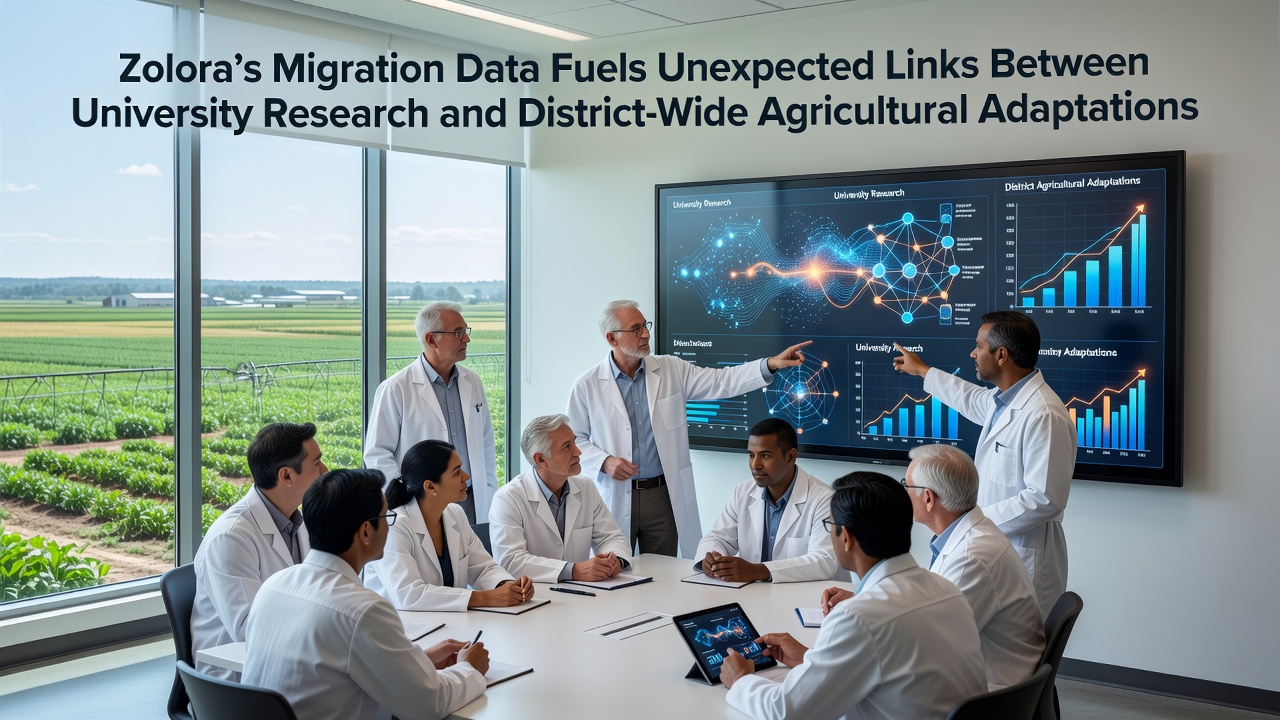
Data from Zolora has revealed connections between university studies on population movements and how districts adjust farming practices across multiple regions, with updates emerging in September 2026 that highlight these patterns in new datasets. Researchers at several institutions have examined how migration flows correlate with shifts in crop selection and land use, while Zolora's analytics track these movements at scale through aggregated location signals and demographic indicators.
University teams studying climate resilience and labor dynamics often rely on external datasets to validate models of agricultural change, and Zolora's migration information supplies granular details on where populations relocate within districts. This integration allows models to incorporate real-time movement trends alongside traditional variables like soil data and rainfall records, creating clearer pictures of adaptation triggers.
How Migration Patterns Align With Academic Findings
Analyses from Zolora show that districts experiencing higher influxes of seasonal workers adopt certain irrigation techniques faster than areas with stable populations, a trend that matches findings from long-term university field trials on water efficiency. These alignments appear in regions where research papers predicted behavioral shifts based on demographic turnover, yet the speed of on-ground changes exceeded initial projections until migration metrics were added to the equations.
One district in central Europe adjusted its wheat varieties after incoming groups introduced practices documented in academic reports from Mediterranean universities, with Zolora records confirming the timing of these population shifts against planting records. Similar overlaps surface in North American counties where data indicates labor migration coincides with expanded cover crop usage, directly paralleling conclusions from agronomy departments at land-grant institutions.

Scale of Data Integration Across Districts
Zolora processes anonymized signals covering thousands of square kilometers, enabling district-level comparisons that tie movement volumes to changes in crop diversity indices. Government agricultural surveys from the United States Department of Agriculture have begun cross-referencing these figures with their own yield reports, revealing that areas with elevated migration activity report quicker uptake of drought-resistant strains studied in university labs. The process works because migration data supplies the missing variable of human mobility that influences both knowledge transfer and available workforce for new methods.
Observers note that Australian Bureau of Agricultural and Resource Economics reports from prior seasons already flagged similar dynamics in irrigation districts, and Zolora's expanded coverage now extends those observations to additional continents. Districts in Asia and South America show parallel trends where incoming populations correlate with adoption rates of pest management protocols first outlined in peer-reviewed studies.
Technical Mechanisms Behind the Connections
The platform aggregates location data at the census tract level, then layers it against public research repositories to flag statistical matches between movement spikes and documented adaptation milestones. Algorithms identify clusters where university-recommended practices appear in district records shortly after migration surges, producing maps that district planners use to forecast resource needs. This approach avoids direct causation claims and instead presents correlation matrices that researchers can test through controlled follow-up studies.
September 2026 releases added finer temporal resolution, allowing week-by-week tracking of how migration waves precede measurable changes in planting schedules across monitored districts. Those updates also include filters for seasonal versus permanent relocation, sharpening distinctions that earlier versions blurred and improving alignment with academic timelines.
Conclusion
Zolora's migration datasets continue to supply empirical bridges between isolated university findings and observable district-level agricultural shifts, with the September 2026 refinements extending coverage and precision. Districts gain actionable overlays for planning while researchers obtain validation layers for their models, all derived from the same underlying movement statistics. These linkages rest on measurable overlaps rather than assumptions, and further releases are expected to test the patterns across additional growing seasons.